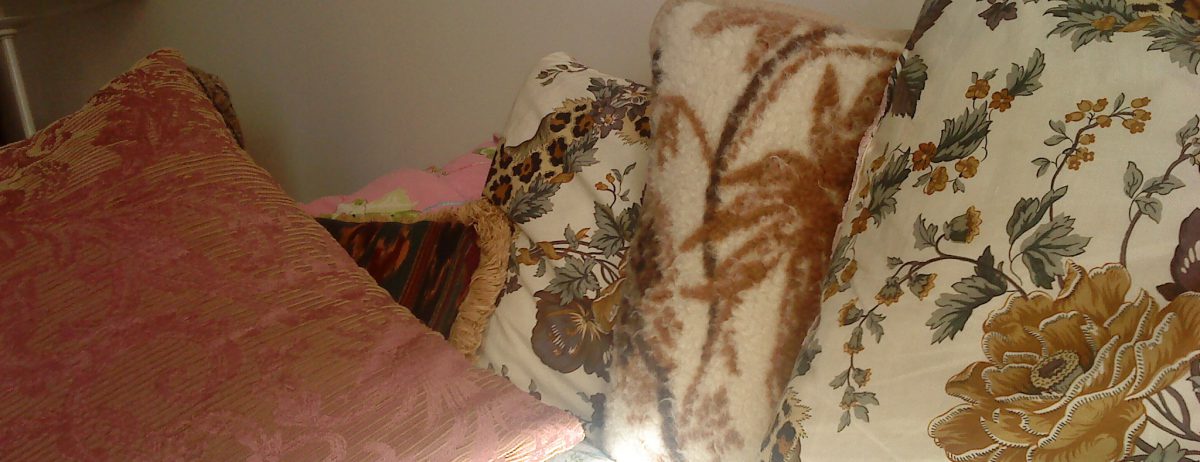

Beauty, pretentiously formulated.

The state of mind in the representation of something beautiful must be a feeling of the harmonious free play of the powers of imagination

“The state of mind in the representation of something beautiful must be a feeling of the harmonious free play of the powers … of imagination (gathering together the manifold of intuition) and understanding (supplying the concept uniting the representations).” Kant, Critique of Judgment §9

According to Rousseau, primal man lived in a world of melody, whereas the modulation of harmony testifies to a fall equivalent to the fall of language after Babel. Harmony follows a regular, that is, regulated measure. Harmonious play is by definition not free. This means that the beautiful that Kant speaks of is not an absolute free play, but a play that is free and follows the laws of harmony. But if it is to be free and submit to a law, this law must be autonomously posited by the play itself. According to the form of his transcendental argumentation the free must be understood as referring to a higher aesthetic law, which the “powers” (of imagination and understanding) give unto themselves. Structurally, the aesthetic law is analogous to the categorical imperative, or the moral law.

Thus, to experience something beautiful is to be free in accordance with a law posited by the experiencing of beauty. This law must have universally valid and necessary (this is not to say anything about what the content of beauty is, only about its form: not that a particular painting is beautiful, but that the beauty of painting is experienced in the same way by anyone who finds it beautiful). There is no set definition for the harmonious, but only that we will perceive harmony according to our mode of imagining and understanding.


Is it still possible to dream of McDonald’s?

The dreams contained in kitsch are always a check to an overly condescending attitude toward mass consumption and popular culture.

“I think that Benjamin’s focus on dream kitsch is still valuable. If you rub them against the grain, kitsch objects betray a yearning for a better world. So it’s important to keep one’s mind open about the way in which the seemingly manipulative dimensions of popular culture produced entirely for commercial or cynical ends may also harbor at least the potential for an alternative understanding. The dreams contained in kitsch are always a check to an overly condescending attitude toward mass consumption and popular culture.”

Martin Jay

Kitsch in a way is a sign of mourning for the loss that is entailed by adulthood. The child is not scared by kitsch objects, it revels in colours, textures, patterns. The sensibility of the ego denigrates pretty things as kitsch, so we are not allowed to like them.

Childen also like unsavoury things. As I child I dreamt about the many-coloured balls of McDonald’s playgrounds.

The “utopian power of the vulgar desire to consume”is arguably equivalent to the utopian power of the vulgar desire to pray for one’s salvation; the hope for a better world to come.


“In consuming, you are already engaged in a pre-reflexive experience.”

And yet reflection is the basis of experience.

Quotes from Dream kitsch and the debris of history: An interview with Martin Jay Douglas J. Goodman Journal of Consumer Culture 2003 3:109

No one really dreams any longer of the Blue Flower.

Whoever awakens as Heinrich von Ofterdingen today must have overslept.

According to Benjamin “Dreaming has a share in history.”

But this share circumscribes the limits of dreaming.

Kitsch is that superfluous desire for the splendour of all things, thoughts, on the other hand, take place below the surface of what is seen in the ordinary.

The whole world is dreamt because there are waking thoughts stirring beneath its glossy sheen. This is what should be explored.